
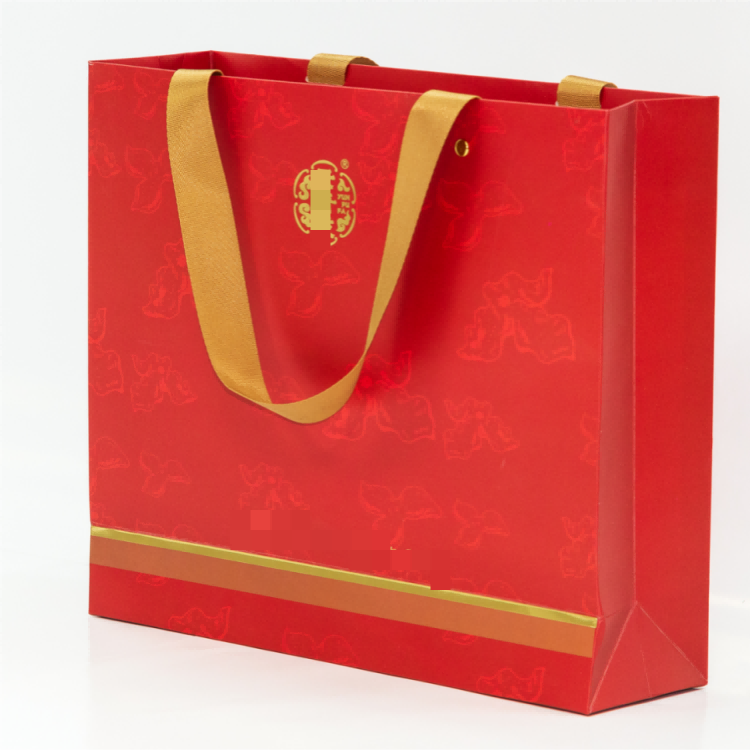
In today's competitive marketplace, businesses are constantly seeking innovative ways to enhance their brand visibility and create lasting impressions on customers. Custom paper bags have emerged as one of the most effective and eco-friendly promotional tools, offering companies a unique opportunity to transform everyday packaging into powerful marketing assets. These versatile carriers not only serve their primary function of transporting goods but also act as mobile billboards that extend brand reach far beyond the point of purchase.
The evolution of paper bag customization has revolutionized how businesses approach packaging design, moving from simple brown carriers to sophisticated branding vehicles. Modern printing technologies and design capabilities have unlocked endless possibilities for creating distinctive custom paper bags that reflect brand personality and values. From luxury boutiques to local cafes, organizations across various industries are recognizing the substantial impact that thoughtfully designed packaging can have on customer perception and brand loyalty.
Design Elements and Visual Branding
Logo Integration and Brand Identity
The foundation of effective custom paper bags lies in strategic logo placement and brand identity integration. Companies must carefully consider how their logo will appear on different bag sizes and handle configurations to ensure maximum visibility and impact. The positioning of logos on custom paper bags should account for how customers will carry and display the bags, optimizing for both aesthetic appeal and brand recognition. Professional designers recommend placing primary logos on the front panel at eye level, while secondary branding elements can be distributed across other surfaces for comprehensive coverage.
Color psychology plays a crucial role in logo integration, as the chosen palette must harmonize with the paper material while maintaining brand consistency. High-contrast combinations often yield the most striking results, ensuring that logos remain clearly visible across various lighting conditions and environments. Custom paper bags serve as three-dimensional canvases where brand elements can be strategically arranged to create cohesive visual narratives that resonate with target audiences.
Color Schemes and Typography
Selecting appropriate color schemes for custom paper bags requires careful consideration of both aesthetic appeal and practical production constraints. The paper substrate's natural properties influence how colors appear when printed, making it essential to work with experienced manufacturers who understand color reproduction on different paper grades. Sophisticated custom paper bags often incorporate gradient effects, metallic accents, or specialty inks that create premium appearances while maintaining cost-effectiveness.
Typography selection significantly impacts the overall effectiveness of custom paper bags as branding tools. Font choices must balance readability with brand personality, ensuring that promotional messages and company information remain legible across various viewing distances. Modern design trends favor clean, sans-serif typefaces for contemporary brands, while luxury retailers often opt for elegant serif fonts that convey sophistication and heritage. The scale and spacing of text elements require careful calibration to maintain visual hierarchy and prevent overcrowding on the bag surface.
Printing Technologies and Customization Methods
Digital and Offset Printing Techniques
The choice between digital and offset printing for custom paper bags depends on several factors including order quantity, design complexity, and budget considerations. Digital printing offers exceptional flexibility for short runs and variable data applications, allowing businesses to produce custom paper bags with personalized messages or seasonal variations without significant setup costs. This technology excels at reproducing photographic images and complex graphics with precise detail, making it ideal for brands that require high-resolution imagery on their packaging.
Offset printing remains the preferred method for large-volume custom paper bags due to its superior color consistency and cost-effectiveness at scale. This traditional technique produces remarkably uniform results across thousands of units, ensuring that brand colors remain consistent throughout entire production runs. The initial setup investment for offset printing is typically recovered when producing custom paper bags in quantities exceeding several thousand pieces, making it the economical choice for established businesses with predictable packaging needs.
Specialty Finishes and Enhancement Options
Contemporary custom paper bags can incorporate numerous specialty finishes that elevate their perceived value and tactile appeal. Hot stamping techniques apply metallic foils or holographic elements that catch light and draw attention, creating premium appearances that justify higher product pricing. These enhancement options work particularly well for custom paper bags intended for luxury goods or special occasions, where exceptional presentation is paramount.
Embossing and debossing create dimensional effects on custom paper bags without requiring additional materials, relying instead on precise pressure application to raise or lower selected design elements. These techniques add sophisticated tactile qualities that encourage customer interaction and create memorable unboxing experiences. Spot varnishing and matte/gloss combinations provide subtle contrast effects that highlight specific design elements while protecting high-wear areas from handling damage.
Material Selection and Sustainability Considerations
Paper Grade Options and Durability
The foundation of exceptional custom paper bags begins with selecting appropriate paper grades that balance durability, printability, and environmental responsibility. Kraft paper remains the most popular choice for custom paper bags due to its natural strength characteristics and excellent print receptivity. Virgin kraft papers offer superior brightness and smoothness for detailed graphics, while recycled alternatives provide environmental benefits that align with sustainability-focused brand messaging.
Weight specifications for custom paper bags must align with intended use cases and load requirements. Lightweight options ranging from 70-100 GSM work well for clothing retailers and promotional applications, while heavier grades exceeding 150 GSM provide the structural integrity needed for books, electronics, and other dense products. The relationship between paper weight and printing quality requires careful evaluation, as heavier substrates often produce richer color saturation and sharper text reproduction in custom paper bags.
Eco-Friendly Materials and Certifications
Modern consumers increasingly prioritize environmentally responsible packaging, making sustainable material choices crucial for custom paper bags that support positive brand perception. Forest Stewardship Council certification ensures that paper materials originate from responsibly managed forests, providing third-party verification of environmental stewardship. These certifications can be prominently displayed on custom paper bags to communicate corporate responsibility and appeal to environmentally conscious consumers.
Post-consumer recycled content integration allows custom paper bags to contribute to circular economy principles while potentially reducing material costs. Advanced processing techniques now enable recycled papers to achieve quality levels comparable to virgin materials, eliminating performance compromises previously associated with sustainable options. Water-based inks and adhesives further enhance the environmental profile of custom paper bags by eliminating harmful solvents and facilitating easier recycling processes.
Handle Options and Structural Features
Twisted Paper Handles and Rope Alternatives
Handle selection significantly influences both the functionality and aesthetic appeal of custom paper bags, with twisted paper handles offering excellent strength-to-weight ratios and seamless brand integration opportunities. These handles can be manufactured in colors that complement or contrast with the bag body, creating cohesive design themes that reinforce brand identity. The manufacturing process for twisted paper handles allows for custom colors and patterns that would be difficult to achieve with alternative materials.
Cotton rope handles provide premium tactile experiences that elevate the perceived value of custom paper bags while offering superior comfort during extended carrying periods. These handles work particularly well for luxury applications where customer experience is paramount, though they typically increase production costs compared to paper alternatives. Polypropylene rope handles offer weather resistance and durability advantages for custom paper bags intended for outdoor use or extended storage periods.
Die-Cut Handles and Reinforcement Techniques
Die-cut handles integrated directly into the bag structure eliminate separate handle attachment processes while creating sleek, minimalist appearances perfect for contemporary brand aesthetics. This approach works best for smaller custom paper bags carrying lightweight items, as the handle strength depends entirely on the paper substrate properties. Strategic reinforcement around die-cut handle areas prevents tearing and extends the functional lifespan of custom paper bags.
Gusset reinforcement techniques distribute weight loads more effectively across the entire bag structure, enabling custom paper bags to safely carry heavier items without compromising handle integrity. Professional manufacturers employ precise folding and adhesive application methods that create virtually seamless reinforcement zones. These structural enhancements can be incorporated invisibly into custom paper bags, maintaining clean aesthetic lines while significantly improving performance characteristics.
Size Variations and Application-Specific Designs
Standard Sizes and Custom Dimensions
Industry-standard dimensions for custom paper bags have evolved to accommodate common retail products while optimizing manufacturing efficiency and shipping costs. Small sizes typically measure 8x4x10 inches and work well for jewelry, cosmetics, and specialty food items, while medium options around 13x7x17 inches suit clothing and book retailers. Large format custom paper bags exceeding 16x6x20 inches accommodate bulky items and create impressive brand presence for high-value purchases.
Custom dimensions allow businesses to optimize packaging efficiency and create distinctive brand presentations that differentiate their custom paper bags from standard offerings. Unusual proportions can enhance product presentation and reduce packaging waste while creating memorable customer experiences. However, non-standard sizes may increase production costs and require longer lead times, making careful evaluation of cost-benefit ratios essential for custom paper bags with unique specifications.
Industry-Specific Requirements
Different industries impose specific requirements on custom paper bags that extend beyond basic functionality to address regulatory compliance and operational efficiency. Food service applications require grease-resistant coatings or linings that prevent oil penetration while maintaining structural integrity. Pharmaceutical and healthcare industries may mandate specific labeling requirements and tamper-evident features for custom paper bags used in prescription deliveries.
Retail environments with high-volume transactions benefit from custom paper bags designed for rapid packing and efficient storage. These applications prioritize ease of opening, consistent folding characteristics, and space-efficient storage when not in use. Luxury retail environments typically emphasize premium materials and sophisticated finishing techniques that justify higher per-unit costs for custom paper bags that enhance the overall brand experience.
Cost Considerations and Volume Planning
Quantity Breaks and Pricing Structures
Understanding pricing structures for custom paper bags enables businesses to optimize their packaging investments and plan inventory levels effectively. Most manufacturers offer significant quantity breaks at thresholds of 1,000, 5,000, and 10,000 units, with the most dramatic cost reductions occurring at higher volumes. These economies of scale reflect the fixed setup costs associated with printing plates, cutting dies, and machine configurations required for custom paper bags production.
Long-term contracts and annual volume commitments often unlock additional pricing advantages for custom paper bags while providing supply chain stability for businesses with predictable packaging needs. Some manufacturers offer inventory management programs that store finished custom paper bags and release quantities according to predetermined schedules, reducing storage requirements for customers while maintaining competitive pricing structures.
Hidden Costs and Budget Planning
Comprehensive budget planning for custom paper bags must account for various ancillary costs that may not be immediately apparent in initial quotes. Shipping expenses can represent significant percentages of total costs, particularly for bulky packaging orders or expedited delivery requirements. International shipping adds complexity with customs duties and documentation requirements that affect the landed cost of custom paper bags.
Design development and revision cycles can accumulate substantial costs when multiple iterations are required to achieve desired aesthetic and functional outcomes for custom paper bags. Professional photography and graphic design services, while often necessary for optimal results, represent additional investments that should be factored into total project budgets. Quality control inspections and sample approvals may require express shipping costs that impact overall project economics for custom paper bags.
Quality Control and Production Standards
Manufacturing Tolerances and Specifications
Professional manufacturing of custom paper bags requires adherence to precise tolerances that ensure consistent quality across entire production runs. Dimensional variations must remain within acceptable ranges to maintain uniform appearance and functionality, with typical tolerances of plus or minus 3mm considered standard for most applications. Color matching standards employ internationally recognized systems like Pantone or CMYK to ensure consistent reproduction of brand colors on custom paper bags.
Handle attachment strength testing verifies that custom paper bags can safely carry specified weight loads without failure during normal use conditions. Industry standards typically require handles to support loads exceeding the expected product weight by safety factors of 2:1 or greater. Adhesive curing times and environmental exposure tests ensure that custom paper bags maintain structural integrity across various temperature and humidity conditions encountered during distribution and storage.
Testing Protocols and Compliance Standards
Comprehensive testing protocols for custom paper bags encompass both functional performance and safety compliance requirements. Drop tests simulate real-world handling conditions to verify that bags maintain integrity when subjected to impact forces during shipping and customer use. Tear strength evaluations measure the resistance of custom paper bags to propagation of small cuts or punctures that might occur during normal handling.
Food-grade compliance testing ensures that custom paper bags intended for direct food contact meet relevant safety standards and do not transfer harmful substances to consumable products. Migration testing evaluates whether inks, adhesives, or coatings used in custom paper bags could contaminate food items under various temperature and moisture conditions. These protocols are particularly important for restaurants, bakeries, and specialty food retailers who rely on custom paper bags for food service applications.
FAQ
What minimum order quantities are typically required for custom paper bags?
Most manufacturers require minimum orders of 500-1000 pieces for custom paper bags, though digital printing technologies have enabled some suppliers to offer minimums as low as 100-250 units. The minimum quantity often depends on the complexity of customization, with simple one-color designs requiring lower minimums than complex multi-color graphics. Businesses should balance minimum order requirements against storage capacity and cash flow considerations when planning their custom paper bags procurement.
How long does production typically take for custom paper bags?
Standard production timelines for custom paper bags range from 2-4 weeks after artwork approval, depending on order complexity and manufacturer capacity. Digital printing options may offer faster turnaround times of 7-10 business days for smaller quantities, while offset printing typically requires longer lead times due to setup requirements. Rush orders are often available for additional fees, though this may limit material and finishing options for custom paper bags.
Can custom paper bags be designed for specific seasonal promotions?
Seasonal customization represents an excellent opportunity for businesses to create timely marketing campaigns through their packaging. Custom paper bags can incorporate holiday themes, seasonal colors, and promotional messages that align with specific marketing periods. Advanced planning is essential for seasonal custom paper bags, as production schedules must account for peak demand periods when many businesses seek similar promotional packaging solutions.
What design file formats are accepted for custom paper bags artwork?
Professional manufacturers typically accept vector-based formats such as Adobe Illustrator files, PDF, or EPS for optimal reproduction quality on custom paper bags. High-resolution bitmap images in TIFF or PNG formats may be acceptable for photographic elements, though vector graphics provide superior scalability and print quality. Most suppliers provide detailed artwork specifications including color profiles, bleed requirements, and resolution guidelines to ensure optimal results for custom paper bags production.
Table of Contents
- Design Elements and Visual Branding
- Printing Technologies and Customization Methods
- Material Selection and Sustainability Considerations
- Handle Options and Structural Features
- Size Variations and Application-Specific Designs
- Cost Considerations and Volume Planning
- Quality Control and Production Standards
- FAQ